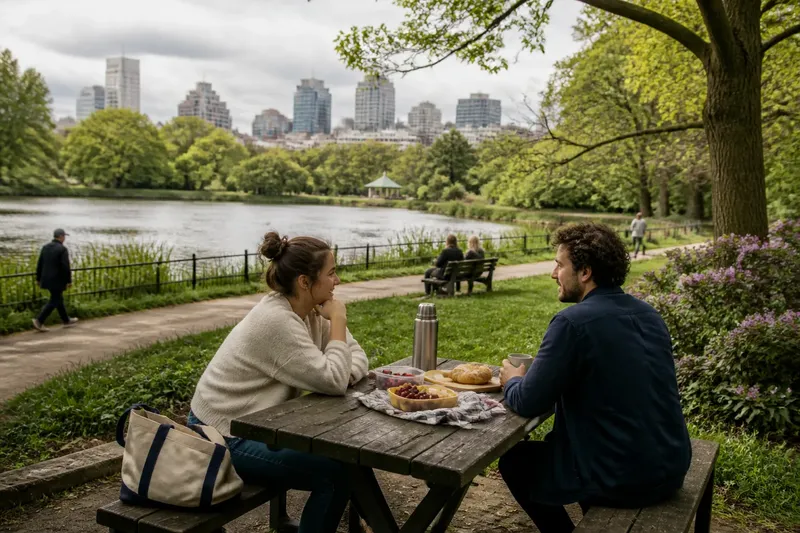
A Lunch-Hour Loop: Build a Walk Around One Small Detour
A lunch-hour loop around one small detour gives a short city walk a clear purpose, with a loose return route that leaves room to pause without rushing.
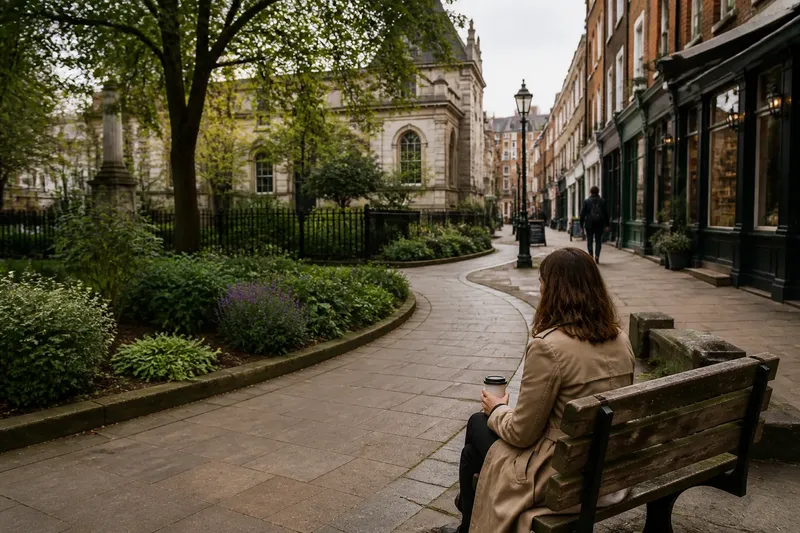
A lunch-hour loop works best when one small detour gives the walk a reason to leave the direct route. Choose a place you can notice or enjoy briefly—a pocket garden, a bookshop window, a striking passage—and let the way back remain flexible. The point is not to cover ground quickly; it is to make a short break feel distinct from the walk you take every other day.
The right detour depends on what you need from the hour. A quiet pause, a change of scenery and a little urban discovery call for different choices, even when they begin from the same office door. Start with your available time and energy, then pick one destination that suits them.
Choose by your day
Before opening a map, decide what kind of interruption would help. The destination should serve the break rather than become another obligation. A lunch-hour loop is small enough to adapt: its shape can change with the weather, the company and the demands waiting afterwards.
- If you need calm: choose a courtyard, a planted churchyard open to visitors, or a quiet stretch beside a canal. These places suit a slower pace because you can pause without needing to buy anything or keep moving.
- If you feel stuck indoors: make the detour a street with a different texture from your usual route: a row of old shopfronts, a lane with varied façades or a public square with room to sit. A change in the surrounding details can be enough; no special attraction is required.
- If you want something to notice: look for one visible feature, such as a tiled entrance, a public sculpture or an unusual building corner. A specific object gives the walk a focus without requiring a long visit.
- If you are walking with a colleague: choose somewhere with an easy-to-understand meeting point and a route that leaves space for conversation. A broad street or public garden often works better than a crowded passage where you have to keep stepping aside.
- If your break feels unpredictable: pick a destination with more than one way back. A square or park edge lets you shorten the loop if time tightens, while a dead-end lane can leave you retracing the same stretch.
One destination is usually enough. Adding a second stop often turns a restorative loop into a sequence of errands, particularly when a queue, crossing or unexpected interruption takes longer than expected.
Pick a modest detour
A useful detour is close enough to feel incidental, but different enough to change the character of the outing. It need not be a landmark. A sheltered arcade, a small public garden or a side street with independent shop windows can make an ordinary walk feel chosen.
Think about what you want to do at the destination, not only what it looks like on a map. If you want to sit, check that there is a public bench or another suitable place to pause. If you want to look around, choose somewhere where stopping will not block a doorway or a narrow pavement.
Public access matters. A courtyard may belong to a business, a garden may close at particular times, and an attractive passage may be private. If the entrance is unclear, choose another nearby point rather than spending the break working out whether you may enter.
Keep the return loose
Plan the outward direction, then leave the return open to choice. You might come back along a parallel street, cross a small square or follow the quieter side of a block. That slight variation gives the loop shape without requiring a tightly scripted itinerary.
Use a map to check the basic layout and identify crossings, barriers and entrances before setting out. Apple Maps, Google Maps or a local council map can help you see whether a canal path connects to the next street or whether a park has an exit on the far side. Treat the map as a prompt for decisions, not a promise that every path is open or pleasant.
Give yourself a simple turning point: after the detour, head back when you reach a particular corner, crossing or recognisable building. This is more adaptable than trying to follow a precise circuit. If the street feels busy or the weather changes, turn towards the office using the nearest comfortable route.
Say you have a break that needs to include time to eat, and you want a little air without ending up far from work. Imagine choosing a small garden behind a library as the single detour, then taking the quieter parallel street back. If the garden is open and the route feels pleasant, pause there; if it is closed, the library’s public-facing forecourt can serve as the visible turning point before you return. The route still has a purpose, but the walk does not depend on one entrance being available.
Match the loop to your energy
Your pace should fit the day, not the idea of what a proper walk ought to be. If you have been sitting in meetings, a gentle circuit with a place to pause may be more appealing than a brisk route through crowded streets. If you already feel alert, a more varied return can provide a useful change of scene.
Choose a surface and setting that feel comfortable in your shoes and clothing. Paving around construction, steep approaches or a busy junction can turn a simple detour into extra effort. A nearby street with clear pavements may be a better choice than a supposedly more interesting route that leaves you concentrating on every step.
For a walk with another person, agree on the destination before leaving and keep the pace conversational. One person may want to stop at a shop window while the other would rather keep moving; knowing that the detour is the shared purpose helps avoid treating every passing sight as a new stop.
Make room for lunch
If the walk includes buying food, make that decision before choosing the detour. A café queue or a busy takeaway counter can absorb the time you meant to spend outside. You could instead take lunch from home, collect something on the way out, or choose a destination close to a place where you can eat without extending the route.
Keep food and walking compatible. A covered bench or a broad public seating area may work better than a narrow garden path, and a takeaway that is difficult to carry can make the return uncomfortable. When lunch is the main purpose of the break, put the food stop first and treat the detour as a nearby addition rather than a competing attraction.
Some days are better suited to a walk without a meal stop at all. If you have little time or want a genuine pause from decisions, take a drink or snack you already have and let the loop remain simple. There is no need to turn every lunch break into a search for a new place to eat.
When does a lunch-hour loop fit?
How do I choose a detour near work?
Look for a public place or visible feature that differs from your usual route and can be reached without a complicated crossing or entrance. Choose the option that matches your reason for walking, whether that is quiet, fresh air or something particular to notice.
Should I plan the whole route in advance?
Check the outward route and one plausible way back, but leave room to change direction. A fixed circuit can become awkward if a path is closed, a pavement is crowded or you simply want to head back sooner.
What if my lunch break is very short?
Choose a detour close to your starting point and make the destination itself the turning point. Keep the return direct, and skip any food queue or extra stop that would make the break feel pressured.
Can I take the same loop more than once?
Yes, if the route still suits the day. The same garden or side street can feel different in changing light or weather, and you can vary the return without adding another destination.
Leave one decision open
A lunch-hour loop should not require constant checking. Once you have chosen one detour and a clear way to return, put your phone away unless you need it to confirm an entrance or find a crossing. Looking up from the map is part of what makes the walk a break.
Keep one small choice for the moment itself: whether to sit for a while, take the side street or return directly. That freedom is the useful difference between a route with a purpose and a schedule with no room in it. For a lunch-hour loop, one good detour and a flexible return are enough to make an ordinary part of the city feel newly available.