The Park Picnic Myth: A Better View Is Not the Whole Plan
A park picnic works best when comfort, company and a simple activity support the view, helping you choose a spot you can enjoy rather than merely admire.
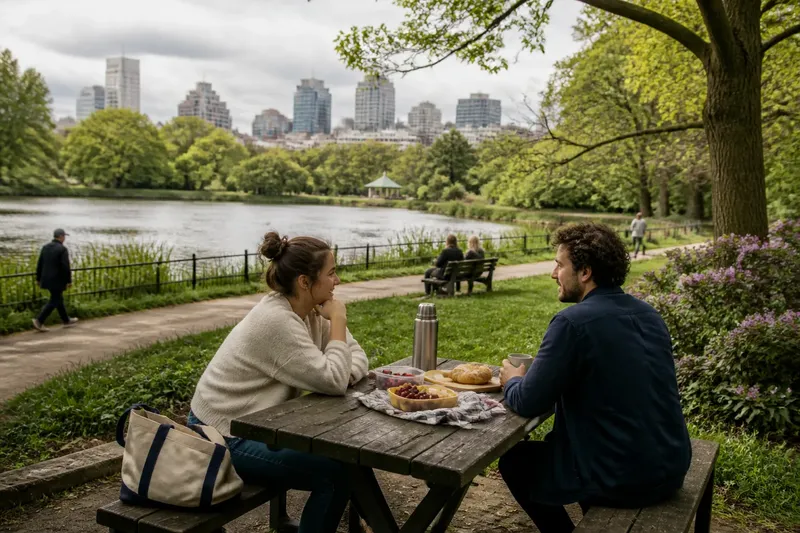
A park picnic needs more than a handsome view: the patch of ground, the company and the small thing you do together shape whether you settle in or keep shifting. When choosing a city park picnic spot, treat the view as one part of the plan, not the plan itself. A fountain, skyline or flower bed can draw you over; it cannot make a hard bench comfortable or give a quiet afternoon an easy rhythm.
That distinction changes how you choose a place. Instead of asking only what looks lovely, consider how you will sit, what you want to share and what might make the time feel companionable without turning it into an itinerary.
Scenery has a job
A good view gives a picnic a point of attention. It might be a pond with ducks, a bandstand, a long avenue of trees or simply the changing light on nearby buildings. These sights can make a pause feel distinct from sitting at home, but they are not constant entertainment.
Once the first look around is over, the surroundings recede. If the ground is damp, the route is noisy or the only available seats face a busy path, those details become more noticeable than the skyline. A visually striking corner may also be exposed to wind or offer little shade.
Think of scenery as an invitation rather than a promise. It can help you choose among several workable places, while comfort and company determine whether you want to stay after you have taken in the view.
Comfort is practical
Comfort is not a luxury reserved for elaborate outings. It is the ordinary support that lets people eat, talk and relax without constantly adjusting their position. A level grassy area, a broad bench or a picnic table may be less picturesque than the water’s edge, yet easier to enjoy.
Consider what you are carrying and what the group needs. A small blanket is useful on dry grass; a table suits food that is awkward to balance; a bench can be kinder to anyone who finds sitting on the ground difficult. A lightweight tote keeps food together, while a reusable napkin can do double duty as a clean place to set down a cup.
Look for shade, nearby bins and enough space to sit without blocking a path. These are modest details, but they change the feel of a stop. A spot that leaves room for prams, mobility aids and passing walkers is more considerate as well as more relaxed.
Company sets the pace
The same park corner can suit one person and frustrate another. A quiet patch near a garden may work for two friends catching up; a family with restless children might prefer an open lawn where movement is easy. The right setting depends on how the people with you like to spend unstructured time.
It helps to agree on the kind of visit before setting off. Some groups want to talk without interruption; others enjoy a little wandering or a shared activity. Nobody needs a formal agenda, but a quick conversation can prevent one person expecting a peaceful sit-down while another expects to keep moving.
Say you and a friend have chosen a scenic pond, but discover that the nearest bench is crowded and the grass is still wet. You could move to a sheltered table a short walk away, share a thermos and a snack, then take a slow lap around the pond afterwards. The view remains part of the outing, but the comfortable seat and unhurried conversation give it a shape.
A small activity helps
A simple activity can bridge the quiet moments without competing with the setting. Bring a paperback to read in turn, a small sketchbook, a deck of cards or a pocket-sized guide to local trees. The point is not to fill every pause. It is to have something easy to pick up when conversation ebbs or the group wants a change.
Choose something that fits the place and the people. Cards need a stable surface if the wind is lively; sketching suits a spot where you can sit facing a subject; a book can be shared in short passages rather than treated as a solitary retreat. Keep the activity optional so that nobody feels obliged to perform or participate.
Food itself can offer a gentle focus. Cut fruit, bread and a thermos of tea invite sharing without much preparation at the park. If you bring anything that needs to stay cool, pack it appropriately and follow the food’s storage instructions; a picnic should not depend on taking risks with what you eat.
Choosing a picnic spot?
Should I choose the best view?
Choose the view that appeals to you, then check whether the place also offers a comfortable way to sit. A slightly less dramatic outlook can be the better choice if it gives your group shade, shelter or room to talk.
What should I bring for comfort?
A blanket or seat cushion, water, a reusable napkin and a bag for rubbish cover many ordinary needs. Add only what suits the weather, the length of your visit and the park’s facilities.
How do I make a picnic less awkward?
Bring one small shared activity, such as cards or a sketchbook, and let people join in if they wish. It gives the group something to turn to without making the outing feel scheduled.
Where should I sit in a busy park?
Look for a place that does not obstruct a path, entrance or popular gathering point. A quieter edge can still feel connected to the park while giving your group space to eat and talk.
Read the place
City parks have their own patterns. Near a playground, a lawn may fill with families; beside a sports field, stray balls and passing teams can interrupt a quiet meal. A garden edge may be peaceful but less suited to a large group. Notice how people are already using an area, then choose a place that fits rather than trying to claim the busiest corner.
Also consider how you will arrive and leave. A spot close to a gate or a public transport stop may make a short break easier, while a more secluded area can suit a longer visit if everyone is happy with the walk. Local park signs and staff guidance matter for rules on food, dogs, fires and protected planting; follow them rather than assuming every lawn is available for every use.
Leave the place ready for the next visitor. Take packaging with you if bins are full, keep food away from wildlife and avoid spreading blankets across planted beds. Care for the setting is part of making an outdoor break pleasant for other people, not an extra task to tack on afterwards.
Make room for change
Outdoor plans are easier to enjoy when they can bend. If the chosen spot is crowded, move to a quieter bench; if conversation is flowing, leave the cards in the bag. A picnic does not need to follow a script to feel intentional. It needs enough thought to keep small inconveniences from taking over.
For a city park picnic, begin with the people and the kind of pause you want, then choose a comfortable place with a view you like. Bring one modest activity and food that is easy to share. The useful question is not whether you found the park’s most beautiful corner, but whether everyone has room to sit, notice the surroundings and enjoy being there.