Before the Food Hall: Where the City Market Fits in a Day Out
A city market stop can connect a gallery visit, a walk and dinner with browsing, small bites and easy conversation without taking over the day.
A city market stop works best when it gives a day out room to breathe. Between a gallery visit and an evening meal, its stalls offer a chance to browse, eat a little and decide together what to do next.
That makes a city market different from a food hall, where the main purpose is usually choosing a meal and finding a seat. A market may include prepared food, but its character also comes from produce, crafts, traders and the changing rhythm of people passing through. These qualities explain why it can make a satisfying pause between activities.
Browsing without a booking
A market allows a group to arrive without agreeing on one destination or ordering plan. One person can look at seasonal fruit while another studies a baker’s counter or a stall selling kitchen tools. The activity is shared, but nobody has to want the same thing.
This loose arrangement suits the middle of a day out, when attention may be flagging after a museum or a long walk. Instead of committing to another scheduled attraction, visitors can drift between stalls and pause where something catches the eye. The market’s variety provides direction without requiring a strict itinerary.
Give the browsing a modest boundary: choose one section of the market, or agree to meet at a recognisable entrance after looking around. That keeps the stop from becoming an exhausting sweep of every aisle, especially in a crowded indoor market with narrow passages.
Small tastes, shared choices
Market food can make a meal more conversational. A pastry, a cup of soup or a piece of fruit may be enough to take the edge off hunger while everyone decides whether to continue towards a café or save room for dinner. Some markets also make it easy to share a few different things rather than settle on one dish.
The distinction matters. A food hall is often organised around a full meal: vendors, seating and a clear choice of what to eat. A traditional city market can be less predictable, with food counters alongside shops and stalls that are primarily for browsing. Check the market’s current listings before making it the main meal plan, since opening hours and the mix of traders can change.
Say you have just left a small art exhibition and your group is hungry but not ready for a sit-down lunch. You could visit a covered market, split a savoury bun and a piece of fruit, then choose a nearby café for coffee; the observable result is a short pause that feeds the group without making the market carry the whole afternoon.
A meeting place with texture
Markets are useful meeting points because they give people something to look at while they wait. A clear entrance, clock or central aisle is easier to describe than an unmarked corner of a busy street. Once together, friends can move on without needing to invent an activity from scratch.
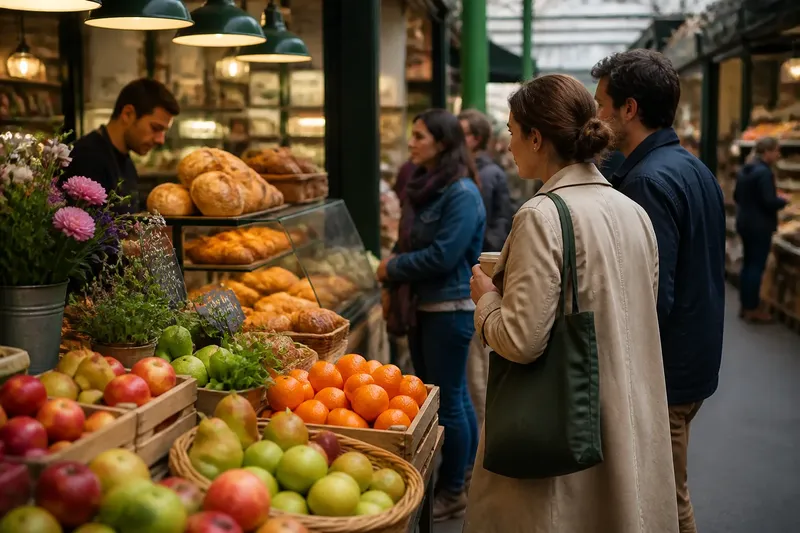
The setting adds texture to an otherwise simple pause: the sound of stallholders talking, the smell of bread, the colours of flowers or stacks of vegetables. These details are not a substitute for an attraction, but they can help a day feel connected to the neighbourhood rather than sealed inside a sequence of bookings.
For a mixed group, agree on a meeting point before anyone wanders away. Markets can be noisy, and phone signals or messages may be easy to miss in crowded buildings. A recognisable landmark inside or just outside the market makes regrouping less awkward.
A bridge between plans
A city market can sit between activities because it tolerates an uncertain schedule. A gallery visit might end early, a walking route might take longer than expected, or a friend might join later. Browsing can expand or contract to suit the time available, unlike a timed performance or a restaurant reservation.
Its location matters more than its reputation. Look for a market near the route you already intend to take, or one that connects two areas you want to visit. A celebrated market on the far side of town may turn a relaxed interlude into a separate expedition, while a smaller neighbourhood market can fit naturally between a cultural stop and a later walk.
Keep the next activity in mind when choosing what to buy. A fragile cake or a bag of fresh flowers may be inconvenient to carry through a museum, while a small snack can travel easily. If you want to browse properly, place the market before activities that require free hands or careful attention.
Local character in ordinary goods
Markets can reveal a city through practical things rather than formal interpretation. Stalls may reflect local cooking habits, the produce in season, or the kinds of household goods people buy nearby. A brief conversation with a trader can add context, but browsing quietly is also a valid way to take in the place.
Look beyond the most photographed counters. A market’s everyday character may be clearer in a greengrocer’s display, a small bakery or a stall selling items residents use regularly than in a row of souvenirs. That does not make tourist-facing stalls less worthwhile; it simply gives visitors another way to choose what to notice.
When buying something, consider how it will fit the rest of the outing: whether it can be carried comfortably, eaten soon or saved for later. A small, useful purchase can become a pleasant reminder of the neighbourhood without turning browsing into a shopping mission.
Choosing a market stop?
Is a city market the same as a food hall?
Not usually. A food hall centres on prepared meals and shared seating, while a city market may combine food counters with produce, crafts, household goods and everyday shops.
How long should a market visit take?
Let the next activity decide. A brief browse and snack can serve as a pause, while a larger market with several sections may merit a more open stretch of the day.
Should I eat before or after browsing?
If you are hungry, start with something small so the group can look around comfortably. If the market is known for prepared food and you have time to sit, make the meal the centre of the stop instead.
How do I choose which market to visit?
Check its location, opening hours and current trader information, then ask whether it fits the route and mood of the day. A nearby market that suits a flexible pause may be a better choice than a larger destination requiring a detour.
For a day out, the best city market stop is often the one that leaves the rest of the plan intact. Treat it as a place to pause, browse and make a small decision together, and it can connect the day’s activities without competing with them.